THE RIPE STUFF
7 Jun ‘26
Healthcare eLearning Solutions for Public Health & Nonprofit Organizations
7 Jun ‘26
In: Custom eLearning Solutions, Nonprofit Resources, / By: Ripe Media
Key Takeaways
- Healthcare eLearning solutions range from LMS platforms to fully custom course development — most organizations need both
- Public health and nonprofit programs have distinct requirements: trauma-informed design, bilingual delivery, CDC TRAIN compliance, and grant-cycle flexibility
- Off-the-shelf content rarely fits the complexity of public health training — custom development is usually the better investment
- The right solution matches your audience, your delivery platform, and your compliance requirements
- Ripe Media specializes in healthcare eLearning for mission-driven organizations, government agencies, and public health programs
Healthcare eLearning isn’t one thing. It’s a category that spans clinical compliance modules for hospital staff, community health worker certification programs, trauma-informed care training for social service agencies, and federally-funded public health curricula delivered in multiple languages to populations across the country.
If you’re a program director at a nonprofit, a public health agency, or a government department, the generic “healthcare eLearning solutions” landscape wasn’t built for you. Most of it was built for hospital HR departments and pharmaceutical companies.
This guide is for the other side of healthcare — the mission-driven organizations doing prevention, education, community outreach, and care coordination work that rarely makes the vendor shortlists but has some of the most complex training needs in the sector.
What Are Healthcare eLearning Solutions?
Healthcare eLearning solutions are digital tools and services that enable organizations to deliver training, education, and certification programs online. They generally fall into two categories:
Platforms (LMS) — the infrastructure for hosting, delivering, and tracking learning. Examples include Moodle, Docebo, HealthStream, and CDC TRAIN.
Content — the actual courses, modules, and learning experiences delivered through those platforms. This can be off-the-shelf (pre-built courses you license) or custom-developed (built specifically for your organization and audience).
Most organizations need both — a platform to manage learners and track completions, and content that actually reflects their programs, populations, and protocols.
Solution Types — What’s Right for Your Organization?
Most Flexible
The most flexible and most effective option for organizations with specialized content needs. A development partner builds courses from scratch to match your curriculum, your brand, your audience’s language and literacy level, and your compliance requirements.
What to expect: a collaborative development process involving instructional design, scriptwriting, visual design, and authoring tool development (Articulate Storyline, Adobe Captivate, H5P). Timeline typically 6–16 weeks depending on scope.
An LMS (Learning Management System) is the platform that hosts your courses, manages your learners, tracks completions, and issues certificates. Choosing and configuring the right LMS is as important as the content itself.
Key considerations for public health: Does it integrate with CDC TRAIN? Can it handle cohort-based enrollment? Does it support multilingual interfaces? Can it be configured for community-facing (non-employee) learners?
Short-form content (typically 3–10 minutes) designed for mobile delivery and spaced repetition. Well-suited for field workers, community health workers, and populations with limited time or variable internet access.
Ripe Media Specialty
Not translation — true bilingual development means building content natively in both languages with culturally appropriate imagery, examples, and framing. This is a significant capability gap in the market; most agencies offer translation as an add-on, not native bilingual development.
Ripe Media is one of the few eLearning agencies that offers native bilingual English/Spanish development rather than post-production translation — built bilingual from the ground up, not retrofitted.
Ripe Media Specialty
A specialized approach to content development that accounts for the psychological safety, lived experience, and emotional context of learners who may themselves have experienced trauma. This affects everything from scenario framing to language choices to pacing and navigation design.
Standard eLearning development does not account for these factors. Trauma-informed design requires experienced instructional designers who understand both the content domain and the population being served.
Technical standards that allow courses to communicate with an LMS — tracking completions, scores, time spent, and learner progress. SCORM is the older, more widely supported standard; xAPI (Tin Can) is newer and more flexible for tracking informal and mobile learning. Most custom-developed courses should be built to one of these standards by default.
Special Considerations for Public Health and Nonprofit Programs
Public health and government-funded programs face requirements that corporate eLearning vendors often don’t account for:
Your LMS and course structure need to meet specific technical and metadata requirements. Not all eLearning partners have experience with this.
Procurement timelines and budget constraints in the nonprofit sector don’t always map to standard agency retainer models. A good partner structures engagements to align with grant periods.
Section 508 compliance applies to federally-funded programs. Courses need to be accessible to learners using screen readers, keyboard navigation, and assistive technologies.
Many public health programs serve community members, not just staff. This changes content design, reading level, cultural framing, and LMS configuration significantly.
Title VI of the Civil Rights Act mandates language access for federally-funded programs serving limited-English proficient populations. This isn’t served by running content through Google Translate.
Accessibility overlays and plugins are not a substitute for accessible development. It needs to be built in from the start, not retrofitted after launch.
How to Choose a Healthcare eLearning Partner
Not all eLearning agencies have experience in healthcare, and fewer still have experience in public health and the nonprofit sector. Here’s what to evaluate:
Healthcare or public health experience
Ask for examples of work in your sub-sector. Clinical compliance training is very different from community health worker certification or trauma-informed care education. A general eLearning portfolio doesn’t tell you whether they understand your audience or your regulatory context.
Bilingual capability
If your audience includes Spanish speakers, ask whether they develop natively in Spanish or translate after the fact. The difference in quality and cultural appropriateness is significant — and for federally-funded programs, post-production translation may not meet language access requirements.
LMS expertise
Do they build on the platform you’re using, or do they recommend one? Can they integrate with CDC TRAIN if needed? An agency that only works in one LMS environment may not be the right fit if your organization has existing infrastructure.
Instructional design depth
Who actually designs the learning? A strong eLearning partner leads with instructional design, not just visual production. Ask to see their instructional design process and the credentials of the person who will lead yours.
Accessibility standards
Can they build to WCAG 2.1 AA and Section 508? Do they test with actual assistive technology? Ask for specifics — an agency that leads with an accessibility overlay plugin as their solution is worth examining carefully.
Engagement structure flexibility
Can they work within grant budget cycles and deliverable timelines? Have they navigated nonprofit or government procurement before? These are operational questions that affect whether the project actually gets completed on time and on budget.
Looking for a comparison of vendors? See our full roundup of top eLearning development companies for healthcare 2026 →
Quick Comparison: Solution Types at a Glance
| Solution Type | Best For | Build Time | Ripe Media? |
|---|---|---|---|
| Custom eLearning Development | Proprietary programs, specialized audiences, bilingual content | 6–16 weeks | Yes |
| LMS Implementation | Distributed learners, certification tracking, CDC TRAIN | 4–12 weeks | Yes (Moodle) |
| Microlearning / Mobile | Field workers, CHWs, low-bandwidth audiences | 2–6 weeks/module | Yes |
| Bilingual Development | Spanish-speaking communities, Title VI compliance | +20–30% vs. English-only | Yes — native |
| Trauma-Informed Design | Vulnerable populations, social services, mental health | Integrated into development | Yes |
| SCORM / xAPI | Any LMS-hosted course | Standard output | Yes |
Why Ripe Media for Healthcare eLearning
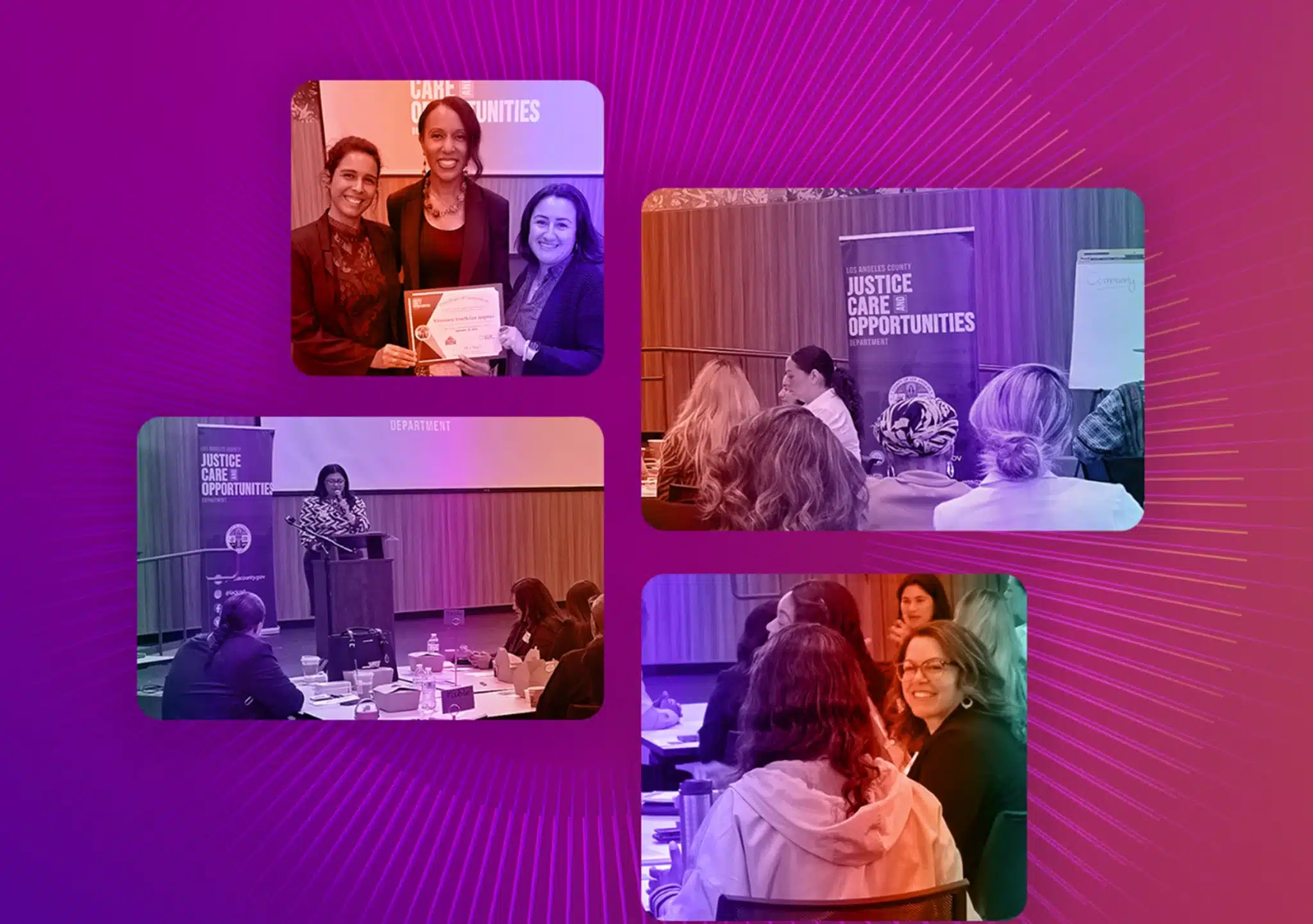
Since 2003, Ripe Media has built custom eLearning solutions for public health agencies, nonprofits, and government departments across Los Angeles and beyond. Our client work includes LA County Department of Mental Health, LA County Justice Care and Opportunities Department, and federally-funded public health programs serving diverse urban communities.
We specialize in the intersection of mission-driven work and technical execution:
- Native bilingual English/Spanish development — not translation, built bilingual from the ground up
- CDC TRAIN-compliant course delivery — including metadata, LMS integration, and submission requirements
- Trauma-informed instructional design — content that accounts for the lived experience of learners in vulnerable populations
- Moodle LMS development — open-source, flexible, cost-effective, and fully customizable for community-facing programs
- ADA and Section 508 accessibility — built in from the start, not retrofitted
- Grant-cycle engagement structures — flexible project scoping that aligns with nonprofit and government procurement timelines
We’re not a volume shop. We take a select number of projects and do them well.
Frequently Asked Questions
What is the difference between healthcare eLearning and clinical eLearning?
Healthcare eLearning is a broad category covering any digital training in the health sector — including public health education, community health worker certification, patient education, and administrative compliance. Clinical eLearning specifically refers to training for clinical staff (nurses, physicians, allied health professionals) covering medical procedures, clinical workflows, and patient care protocols. Public health and nonprofit organizations typically need the former, not the latter.
Do we need a custom LMS or can we use an existing platform?
Most organizations don’t need a fully custom LMS. Platforms like Moodle, Docebo, or HealthStream can be configured to meet most public health and nonprofit needs at significantly lower cost than building from scratch. The right choice depends on your learner population, reporting requirements, budget, and whether you need CDC TRAIN integration.
How much does healthcare eLearning development cost?
Custom course development typically ranges from $8,000 to $40,000+ per course hour depending on complexity, interactivity, and bilingual requirements. LMS implementation projects range from $5,000 for basic Moodle setup to $50,000+ for complex multi-tenant configurations. Most organizations start with a scoped pilot project before committing to a full program build.
What is CDC TRAIN and does our program need it?
CDC TRAIN is the public health learning network managed by the Public Health Foundation. It aggregates continuing education and training opportunities for public health professionals and makes them searchable and trackable through a national platform. If your program qualifies as a public health continuing education offering, listing it on CDC TRAIN significantly increases reach and credibility. Not all LMS platforms integrate with CDC TRAIN — confirm this before choosing a platform.
What does bilingual eLearning actually mean?
True bilingual eLearning means the course is developed natively in both languages simultaneously — with culturally appropriate examples, imagery, and framing — not just translated after completion. For programs serving Spanish-speaking communities in the US, native bilingual development produces significantly better learner outcomes than translation and is required for federal language access compliance in many cases.
How long does it take to develop a healthcare eLearning course?
A single custom course module (30–45 minutes of learning) typically takes 8–14 weeks from kickoff to final delivery, including instructional design, scriptwriting, visual design, development, review cycles, and LMS upload. Complex bilingual or interactive courses may take longer. Rush timelines are possible but affect cost and quality.
Planning a healthcare eLearning program for a public health agency or nonprofit?
Ripe Media works with a select number of mission-driven clients each year. We specialize in bilingual development, CDC TRAIN delivery, trauma-informed design, and Moodle LMS implementation for public health and government programs. Happy to give you an honest assessment of what your project would involve.
You Might Also Like
Related Posts

Share this: